


Sorrento is the most famous town on the Sorrento Coast as well as a well-known resort since ancient times due to its breathtaking views, landscape of gardens and citrus groves, marinas and charming historic center.
The many churches and historic buildings, scenic viewpoints and alleys of little stores will make your vacation in Sorrento unforgettable as a guest of Best Western Hotel La Solara, not to mention the clubs, restaurants and cafes where you can spend your free time, the stores where you can go shopping, the festivals that will enliven your evenings and the bathing establishments where you can relax in the sun


During your stay in Sorrento at the Best Western Hotel La Solara you can discover the beauty of the resort through numerous excursions.
It represents one of the most beautiful and lush sections from a naturalistic point of view. The path is easy and flat and skirts the sea on one side and small vegetable gardens and olive groves on the other. At a certain point you will find yourself at a crossroads: the uphill road will lead you along the ridge of Monte San Costanzo, the other to the plateau of Punta Campanella where you will find a Saracen tower, used for sighting and raising the alarm in case of raids, and the remains of the Sanctuary of Minerva. Punta Campanella is also home to legends: according to the Odyssey, Ulysses met the bewitching Sirens here…
Different kinds of excursions are possible in these towns: walking off the beaten path, it is possible to see typical buildings of this area, olive gardens and citrus groves under thatched pergolas, rural houses, hamlets, small churches, dry stone walls and fences, and Mediterranean scrub typical of the area.
One of the most evocative itineraries in terms of environment and climate, typical of this area. Inside there is a nature reserve that preserves a particular type of fern and the ruins of the old paper mills that served as factories for processing the famous Amalfi paper.
Ieranto Bay can be reached either on foot, via a path that departs from the village of Nerano, or by authorized boats. The path takes about an hour and is relatively easy, although it can be tricky in some places due to the poor condition of the steps.
At 1131 meters high, Mount Faito is one of the peaks of the Monti Lattari chain of the Campania Pre-Apennines. Its name derives from the dialect term “faggeto” as the area is rich in beech trees as well as holm oaks and chestnut trees.
Queen Joan’s Baths are a concentration of History, nature and the sea. In order to visit them, one has to walk a short and not very strenuous path that starts from the Capo di Sorrento, the western end of the town of Sorrento. Queen Joan’s Baths are home to the ruins of an ancient Roman villa, which blends perfectly with the beauty of the surrounding landscape.
The Sentiero degli Dei from the Amalfi Coast to the Sorrento Coast and is divided into two sections: the “high” trail, the more strenuous one, from Santa Maria di Castello to Bomerano and the “low” trail, from Bomerano to Nocelle, which is less strenuous and perhaps even more impressive. From the village of Nocelle it is possible to continue the path for half an hour and reach Positano.

The Sorrento Peninsula is home to many gastronomic delicacies that you can enjoy at our restaurant but not only.
Starting from Vico Equense, you can enjoy pork and orange zest meats and dairy products such as burrini, caciottine stuffed with butter mashed potato and the renowned Provolone del Monaco DOP.
Dairy products in the area are artisanal, and at the food stores you can taste and buy typical products (including pizza a metro), but also observe the production cycle.
You can’t miss Sant’Andrea, whose specialties include fresh pasta, fiordilatte fondue with prosciutto and black truffle and squid stuffed with vegetables and shrimp.
Sorrento is also the home of limoncello, a liqueur made from lemon peels that is excellent after lunch and consumed in small glass glasses specially placed in the freezer. We generally recommend that guests of our 4-star hotel stroll through the alleys of the city center and try a limoncello baba and a drop of liqueur. No less important is nocino, a liqueur made by infusing Sorrento walnuts in alcohol.
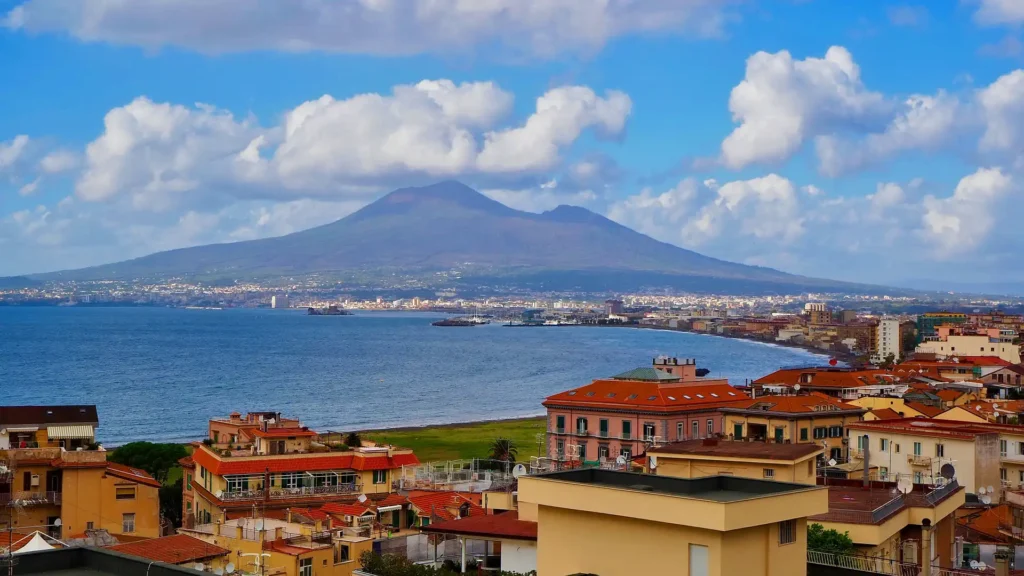
Declared a UNESCO World Heritage Site in 1997, the excavations of Pompeii and Herculaneum, cities buried by the eruption of Mount Vesuvius in 70 B.C., constitute one of the few intact testimonies to the social structure of the time. Indeed, the volcano’s eruption occurred in broad daylight, literally petrifying people’s gestures and their objects. The lava in Pompeii imprisoned people who were trying to save themselves by heading toward the harbor toward the harbor and cooling down marked the outline of the bodies. Similar fate for the inhabitants of Herculaneum, for whom the speed with which the tragedy came to pass left no time even for escape attempts
Admire the sunset in the shadow of Paestum’s temples dedicated to the ancient gods Hera and Neptune, not forgetting the amphitheater, the Via Sacra, the baths and, of course, the city enclosed in the walls. Inside the archaeological site it is possible to take part in various activities: from guided tours to temporary exhibitions to lectures and video projections, all to make you fully experience the magic of Paestum.
Numerous hydrofoils depart from the port of Marina Piccola in Sorrento and in a few minutes will take you to the beautiful Capri, where you can admire the Faraglioni and the Grotta Azzurra, stroll among the historic residences of Anacapri, climb Mount Solaro and sip coffee or an aperitif in the famous Piazzetta.
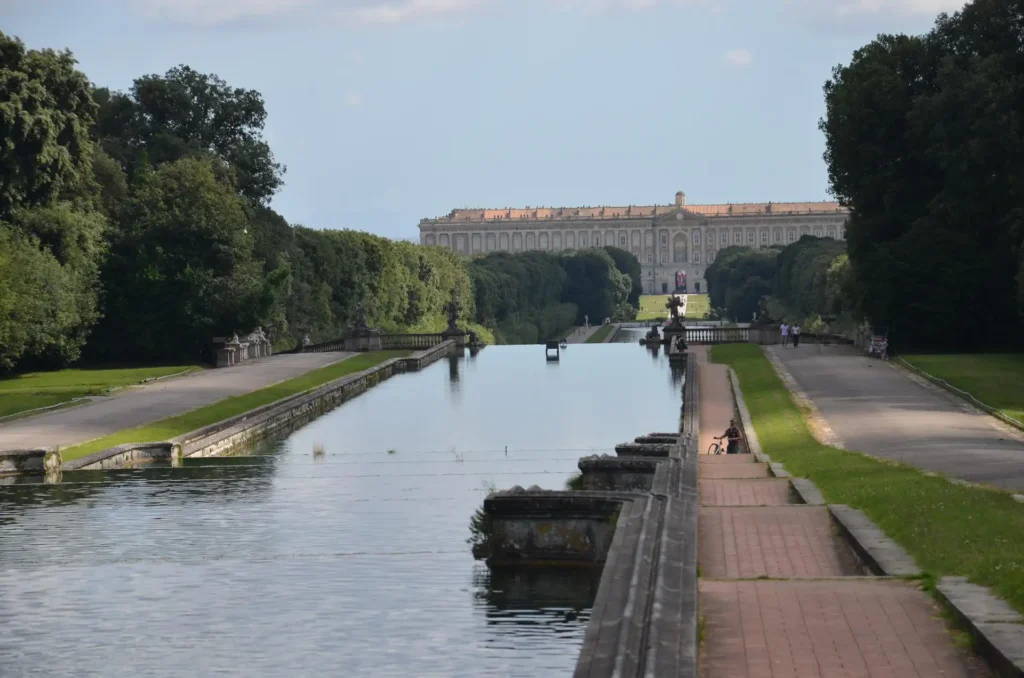
The Royal Palace of Caserta, also called Palazzo Reale di Caserta, is a historic residence that belonged to the Bourbons and has been proclaimed a UNESCO World Heritage Site. Famous for being the largest royal residence in the world, it is characterized by a park in which two sectors are identified: the Italian garden, which houses the famous Great Waterfall, and the English garden, characterized by dense woods.
Considered a UNESCO World Heritage Site, Vietri sul Mare is famous for the ceramics that also adorn the Archconfraternity of the Annunziata and the Rosary.
One of the main tourist centers on the Amalfi coast and remembered by Rossellini in some of his famous postwar films. There are many monuments to be found in the town: the Duomo, the Church of Santa Maria, the Church of San Francesco to that of Santa Chiara, while the main villas are Villa Rufolo, where evidence of Islamic influence can be seen, Villa Cimbrone and Villa Eposcopio.
Amalfi represents the main city of the entire coastline and was once one of Italy’s maritime republics with Genoa, Pisa and Venice. The charm of its monuments (the cathedral, the Church of Santa Maria, the Cloister of Paradise, the Valley of the Mills, the Fountain of St. Andrew and the Arsenal of the Republic) makes it a true jewel of the Amalfi Coast.
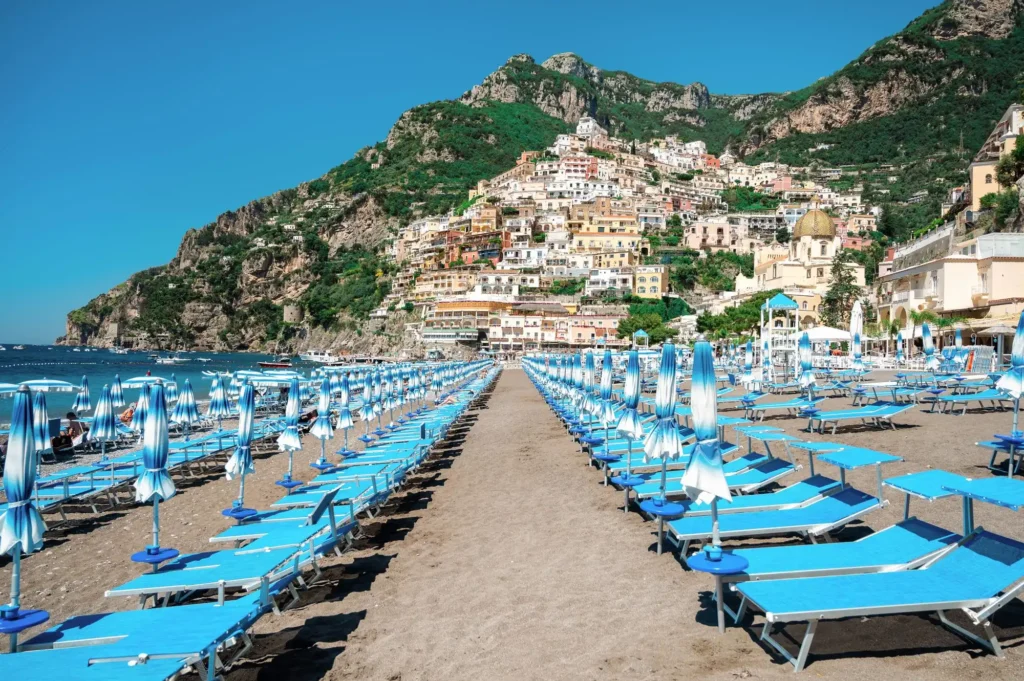
Saracen towers make Positano one of the most important tourist towns on the entire Amalfi Coast, characterized by sheer cliffs, crystal-clear beaches and the town set in the rock.
Our hotel staff will be happy to provide you with all the information you need to easily reach the events of your interest.